Thermography Ensures Resistor Stability
To determine whether Isabellenhütte’s precision resistors – which are used in measuring instruments, reference circuits, calibration circuits, and other applications – meet the high standards required of them, the company uses thermography in its laboratory as part of its development and qualification processes.


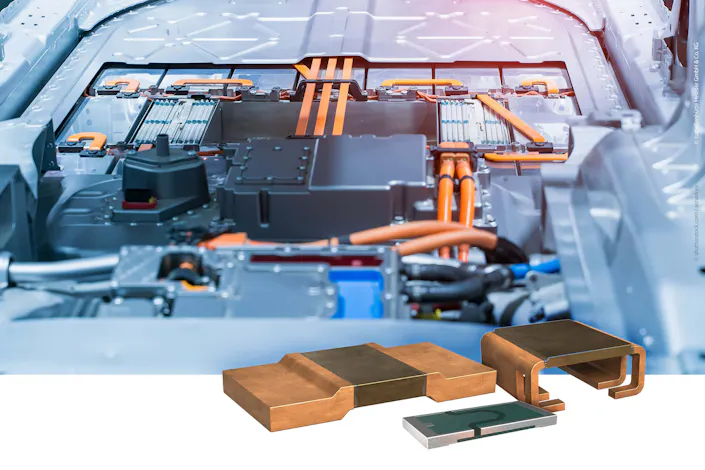
Isabellenhütte Heusler GmbH & Co. KG (Isabellenhütte) manufactures high-tech products for current measurement. Its alloys, resistors, and sensors are used worldwide by leading automotive manufacturers, as well as in the aerospace and medical technology sectors and numerous other industrial applications. Precision resistors are essential components in measuring instruments, reference circuits, and calibration circuits, among other applications. They require precisely defined electrical resistance values that remain as stable as possible despite changes in temperature, aging, and mechanical stress. To determine whether its products meet these requirements, Isabellenhütte uses thermography in its laboratory as part of its development and qualification processes.
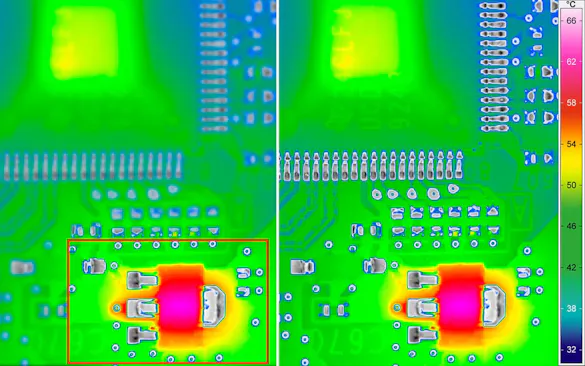
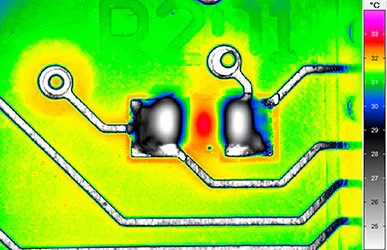
The contactless, two-dimensional, and time-resolved analysis of the thermal behavior of precision resistors using thermography offers numerous advantages. Compared to point-based measurement methods, thermography enables much more effective detection and evaluation of localized heating and its evolution over time. Even the slightest local temperature differences and hot spots on the components can be reliably detected and visualized.
Identifying thermally critical areas under various realistic operating conditions provides the basis for a better understanding of component behavior under changing conditions. These insights allow the resistors' characteristics to be adjusted and optimized to meet specific requirements.


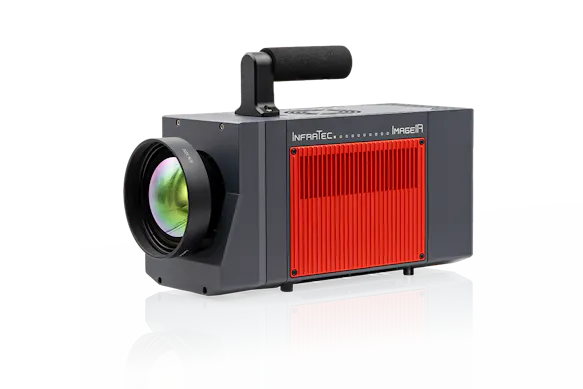
For many years, Isabellenhütte has been using microbolometer infrared cameras from InfraTec’s VarioCAM® series, integrated into its production facilities, to monitor the quality of precision resistors. To analyze the thermal behavior of precision resistors during development and qualification in its technical laboratory, the company has also acquired the more powerful ImageIR® 9400 hp infrared camera. This allows the company to perform microthermographic analyses and evaluate product characteristics in detail. The multifocus function has proven particularly helpful in this regard, as it enables accurate thermographic temperature measurements even on topologically complex electronic assemblies. Multiple images are captured in succession, each focusing on components at different heights, and then combined into a single, consistently sharp image with precise temperature readings.
The ImageIR® camera is equipped with a snapshot detector with a native resolution of (1,280 × 1,024) IR pixels. Using the integrated MicroScan function, the number of pixels can be quadrupled, resulting in a resolution of (2,560 × 2,048) IR pixels, each providing radiometric temperature data. This enables highly accurate and efficient measurements of even the smallest structures – including those on large-area test objects.
The components of the thermography system were specifically tailored to the requirements of this demanding measurement task. The required magnification is achieved using a microscope objective (M = 1.0×), a 50-mm telephoto lens, and an additional close-up lens. The areas of interest can be brought into focus without vibration using the motorized focus unit.
The camera’s full-frame rate of 180 Hz enables accurate, lag-free measurements of dynamic temperature changes over large areas, offering significantly higher performance than conventional microbolometer cameras, such as the VarioCAM® models mentioned above. By using subwindows and the high-speed mode, the frame rate can be increased to meet the requirements of specific applications. For the various analyses, frame rates of up to approximately 1,000 Hz were used, with the spatial resolution adjusted in each case to ensure optimal detection of thermal processes in the precision resistors. At maximum performance, the thermographic system can reliably capture even extremely rapid temperature changes – such as those occurring during pulsed loads – at frame rates exceeding 3,300 Hz in subwindow mode.
The information obtained through thermographic temperature measurements enables Isabellenhütte to assess the characteristics of its precision resistors in greater detail. These insights allow the company to optimize the thermal behavior of the resistors and develop targeted measures to further improve product performance.