Sensor News
In our Sensor News you will not only get information about innovations and events at InfraTec, but also exciting insights into the wide range of applications of our detectors when our customers report. That's why it's also worth taking a look at the archive.


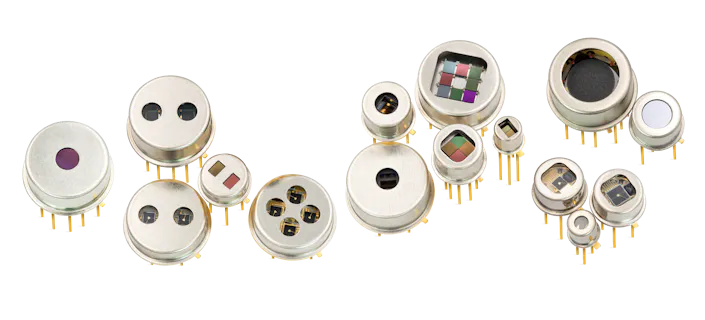
Current Issue of Sensor News
Dear readers,
This year, InfraTec is celebrating its 35th anniversary. A key driver of our success is a strong integration of expertise in research, technology, and production at our Dresden site, combined with close, collaborative partnerships with our customers. This consistent synergy enables us to offer a sustainable and successful product portfolio.
Recently, we expanded the PYRONEER® series to include a detector with thermoelectric cooling. This feature not only compensates for thermal environmental influences but also for varying radiation intensities, such as those occuring between background and sample measurements. As a result, the detector achieves significantly higher measurement accuracy and improved stability.
Explore more about this and other topics in our Sensor News:
35 Years of InfraTec
This year marks the 35th anniversary of InfraTec GmbH Infrarotsensorik und Messtechnik: Our company was entered in the Dresden Commercial Register on June 24, 1991. From its beginnings as a small engineering office, InfraTec has grown into an internationally operating company with more than 240 employees. Today, the Infrared Sensor Technology division is one of the world’s leading suppliers of pyroelectric infrared detectors.
Continuous investments in manufacturing, research, and international infrastructure have driven InfraTec’s growth. Technological milestones such as Fabry-Pérot detectors, digital PyrIQ® models, and the new high-performance detectors of the PYRONEER® series based on DLaTGS underscore our innovative strength. Customers particularly value our unique combination of industrial expertise in component engineering and in-house manufacturing of detector components, as well as our high level of organization and the dedication with which we tackle every task. These are the best prerequisites for remaining on the path to success in the future!
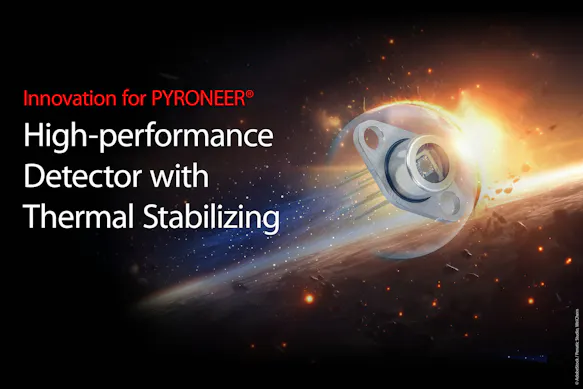
PYRONEER® Detector with Thermoelectric Stabilization
The innovative DSV-7341 detector, designed for both premium and mobile FTIR spectrometers, offers more than just excellent protection against moisture thanks to its hermetic seal: the integration of a thermoelectric cooler (TEC) and a negative temperature coefficient (NTC) thermistor also ensure a stable operating temperature inside the detector.
The combination of these two components allows the user to continuously monitor the chip’s temperature, regulate the TEC, and thus maintain the detector chip at a constant temperature. The temperature-dependent electrical resistance of the NTC can be measured at two dedicated detector pins and used as a feedback signal for the external TEC controller.
In this way, not only thermal environmental influences can be compensated for, but also variations in radiation intensity, such as those that occur between background and sample measurements. The new DSV-7341 detector thus achieves significantly higher measurement accuracy and improved stability.


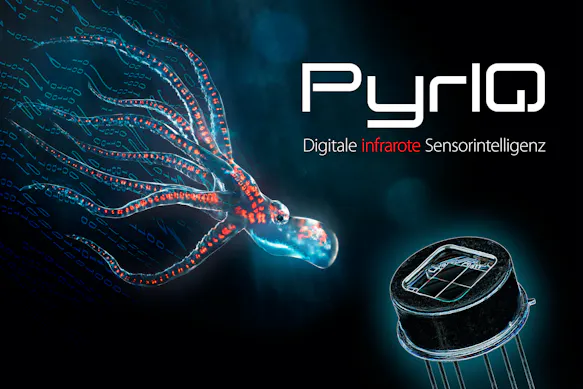
PyrIQ®: Digital Detector Simplyfies Integration
Detectors in the PyrIQ® series are equipped with an application-specific integrated circuit (ASIC). Amplification, signal conditioning, and analog-to-digital conversion thus take place directly within the detector. The 16-bit digital signal provided by the ASIC can be read out at sampling rates of up to 1 kHz via a standard communication interface (I2C) and immediately processed by a microcontroller. This
simplifies system integration,
improves electromagnetic compatibility (EMC), and
ensures full flexibility in configuring the detector parameters.
In practice, PyrIQ® detectors are used in various emission measurement devices for gas and smoke analysis, among other applications. The digital output signal has made it possible to significantly simplify the development of these measurement devices.

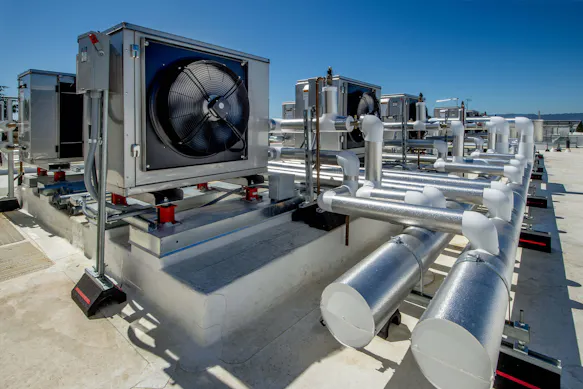
Refrigerants are used in many areas of everyday life, such as for cooling, air conditioning, or heating in homes and industry. Most refrigerants are gaseous at room temperature and under normal pressure and are often referred to as refrigerant gases or cooling gases. Many of these substances exhibit characteristic IR absorption bands, which enable detection via NDIR gas analysis and thus the early detection of leaks in closed refrigeration systems.
Standard IR filters are available for refrigerant gases such as CO2 or hydrocarbons. For other refrigerants, the detector and filters must be selected by our experts on an application-specific basis. In general, the use of planar multi-channel detectors is recommended. This provides a reference channel as well as a wide selection of filters for the precise detection of refrigerants.